Introduction
The integration of Artificial Intelligence in the hospitality sector has transitioned from theoretical concept to practical implementation. Hotels are utilizing AI to optimize operations and improve customer interactions, with the technology becoming essential for competitive survival as personalized service and efficiency become increasingly important.
What is AI in Hospitality?
AI in hospitality encompasses machine learning algorithms, data analytics, and automation tools to improve service delivery, increase efficiency, and personalize guest experiences. These capabilities enable properties to leverage data for strategic choices, reduce manual processes, and interact with customers instantaneously.
Key Applications of AI in Hospitality
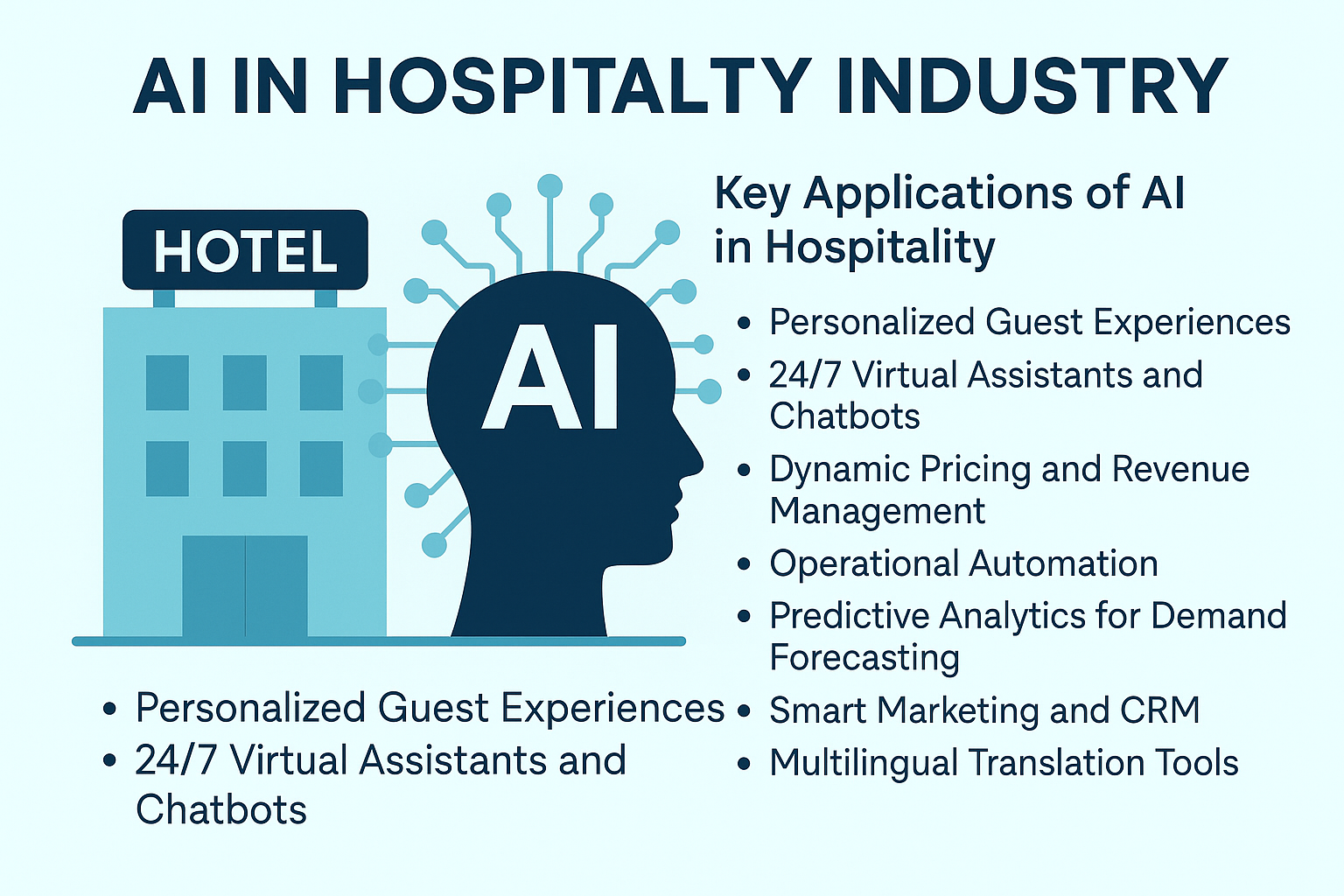
- Personalized Guest Experiences — systems examine visitor information to deliver tailored offerings including room settings and activity suggestions.
- 24/7 Virtual Assistants and Chatbots — automated systems handle inquiries, reservations, and concierge functions continuously.
- Dynamic Pricing and Revenue Management — real-time rate adjustments based on market analysis.
- Operational Automation — streamlined scheduling, housekeeping, stock control, and maintenance planning.
- Predictive Analytics for Demand Forecasting — occupancy and behavior projections using historical patterns.
- Smart Marketing and CRM — targeted audience segmentation and customized outreach strategies.
- Multilingual Translation Tools — real-time communication support for international visitors.
Benefits of AI in Hospitality
- Reduced operational expenses and enhanced productivity
- Elevated visitor contentment through customization
- Strategic decision-making capabilities
- Round-the-clock automated support
- Optimized revenue through adaptive pricing
Challenges and Considerations
Implementation obstacles include data privacy concerns, high implementation costs, and the need for staff training, alongside ethical compliance requirements.
Future Outlook
Expected developments include robotic concierge services, voice-activated room controls, and sustainability-focused AI solutions.
Conclusion
The technology fundamentally transforms hotel management and customer engagement, enabling properties to deliver superior experiences and achieve competitive advancement through digital innovation.