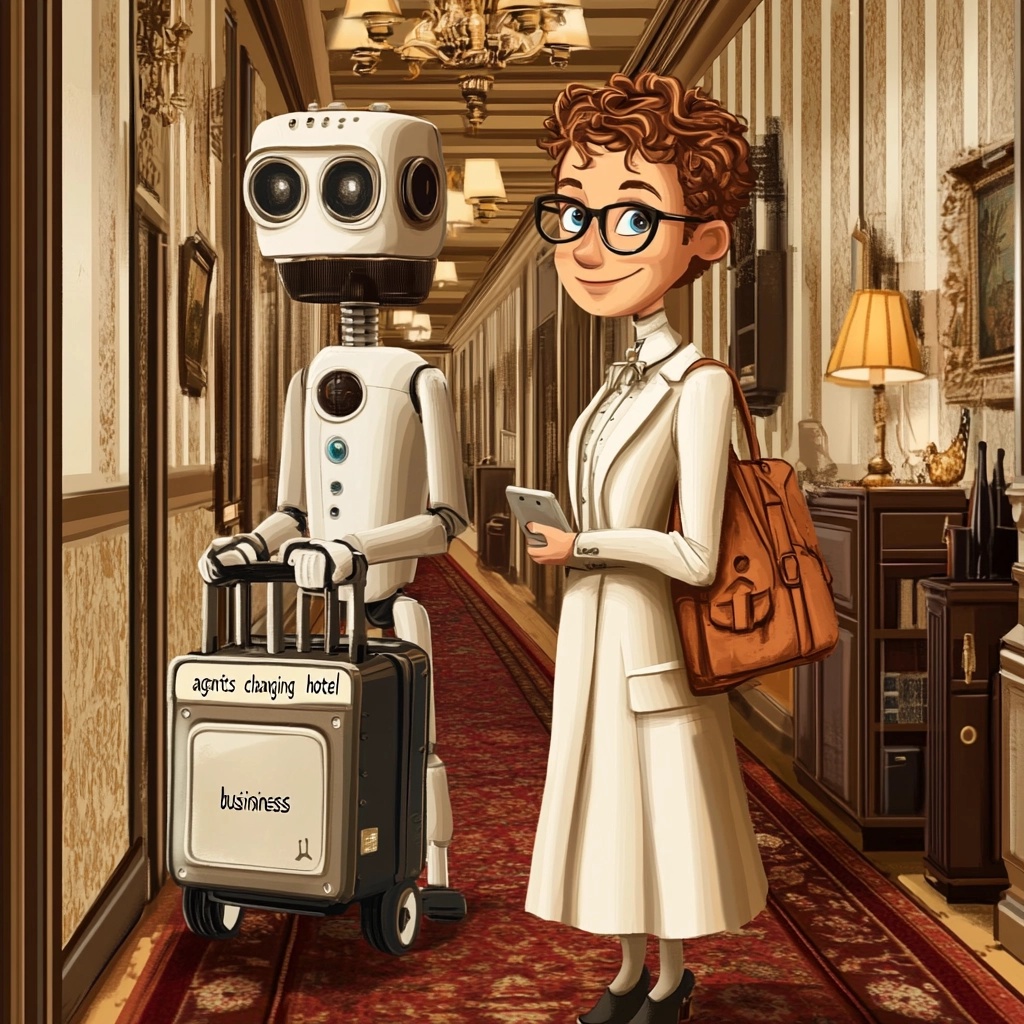
The hospitality industry stands on the cusp of a revolution, driven by artificial intelligence (AI) agents—intelligent, autonomous systems capable of performing tasks, analyzing data, and interacting with guests in ways previously unimaginable. From personalized guest experiences to optimized revenue management, AI agents are poised to redefine how hotels operate, compete, and thrive in an increasingly digital world. Here's a look at how these technologies will shape the future of hotels over the next decade.
1. Hyper-Personalized Guest Experiences
AI agents will elevate personalization beyond what human staff alone can achieve. Imagine checking into a boutique hotel where an AI concierge—accessible via a mobile app or in-room device—already knows your preferences. It suggests a private hike based on your past outdoor activities, adjusts room temperature to your ideal 22°C, and curates a dinner menu featuring locally sourced dishes because it remembers your dietary choices from a previous stay.
This level of customization comes from AI's ability to analyze vast datasets—booking histories, social media activity, and real-time feedback—delivering tailored experiences at scale. By 2030, industry analysts predict that 70% of luxury travelers will expect such hyper-personalized services, with AI agents reducing friction and enhancing satisfaction. Hotels that adopt these systems early will gain a competitive edge, particularly in niche markets like eco-luxury, where guest expectations are high.
2. Seamless Operations and Cost Efficiency
Behind the scenes, AI agents will streamline hotel operations, cutting costs and boosting efficiency. Tasks like inventory management, staff scheduling, and energy optimization will be handled by AI systems with predictive capabilities. For instance, an AI agent could monitor occupancy trends and adjust energy usage in real time, ensuring an eco-friendly design while minimizing waste.
A 2024 McKinsey report estimates that AI-driven automation could reduce operational costs in hospitality by up to 20% by 2035. For smaller boutique hotels, this efficiency is a game-changer, allowing them to compete with larger chains despite limited resources. AI agents will also handle routine guest inquiries—think check-in instructions or Wi-Fi troubleshooting—freeing staff to focus on high-value interactions that build loyalty.
3. Dynamic Revenue Management
Revenue management, the art of pricing rooms to maximize profit, will reach new heights with AI agents. Traditional models rely on historical data and manual adjustments, but AI can analyze real-time variables—flight search trends, competitor pricing, even weather forecasts—to set optimal rates instantly. For a hotel in Zanzibar at the end of November, an AI agent might detect a surge in flight bookings from Europe and raise rates for beachfront suites just as demand peaks.
By 2030, AI-driven revenue management could boost RevPAR (Revenue Per Available Room) by 15-25%, according to Deloitte projections, making it indispensable for hotels aiming to thrive in competitive markets.
4. Enhanced Guest Interaction Through Natural Language
Modern AI agents demonstrate the power of natural language processing (NLP). Future hotel guests will converse with AI concierges as naturally as they would with a human, asking complex questions like, "What's the best sunset spot nearby?" or "Can you book me a private chef for tomorrow?" These agents will respond instantly, pulling data from the web and hotel systems, and even coordinating with local vendors.
This capability will be a boon for boutique hotels, where personalized service is a hallmark. By 2027, Gartner predicts that 60% of guest interactions in hospitality will involve AI, reducing response times from minutes to seconds and enhancing the perception of luxury through effortless communication.
5. Sustainability and Ethical Operations
Sustainability, a growing priority for travelers (62% of luxury guests per a 2024 ICT survey), will be supercharged by AI agents. They can optimize energy and water usage while providing guests with transparent data—"Your stay saved 50 gallons of water today." AI could also track supply chains, ensuring that a hotel's farm-to-table dining uses ethically sourced ingredients, appealing to eco-conscious millennials and Gen Z travelers.
Moreover, AI agents will help hotels navigate ethical challenges, such as avoiding overbooking or ensuring fair pricing, by adhering to programmed guidelines. This builds trust, a critical factor as 80% of travelers say they'd switch brands over ethical concerns, per a 2023 Edelman study.
6. Challenges and Considerations
The rise of AI agents isn't without hurdles. Initial implementation costs—estimated at $50,000-$100,000 for a small hotel—could deter adoption, especially for independents. Data privacy remains a concern; guests may hesitate if they feel overly monitored. And while AI can enhance efficiency, over-reliance risks diluting the human touch that defines hospitality. Hotels must strike a balance, using AI to augment, not replace, staff.
The Future Is Now
By 2035, AI agents will be as integral to hotels as Wi-Fi is today. Boutique properties could leverage them to offer unmatched experiences, while larger chains use them to scale personalization across thousands of rooms. The winners will be those who adopt early, integrating AI into their DNA to meet evolving guest expectations.
As the sun sets on traditional hospitality, AI agents are lighting the way forward—efficient, intelligent, and guest-centric. The question isn't if they'll change hotels, but how quickly hoteliers will embrace the transformation.